
Endurabook is a repairable laptop project built around a simple principle: hardware you buy should last, and when something breaks, you should be able to fix it.
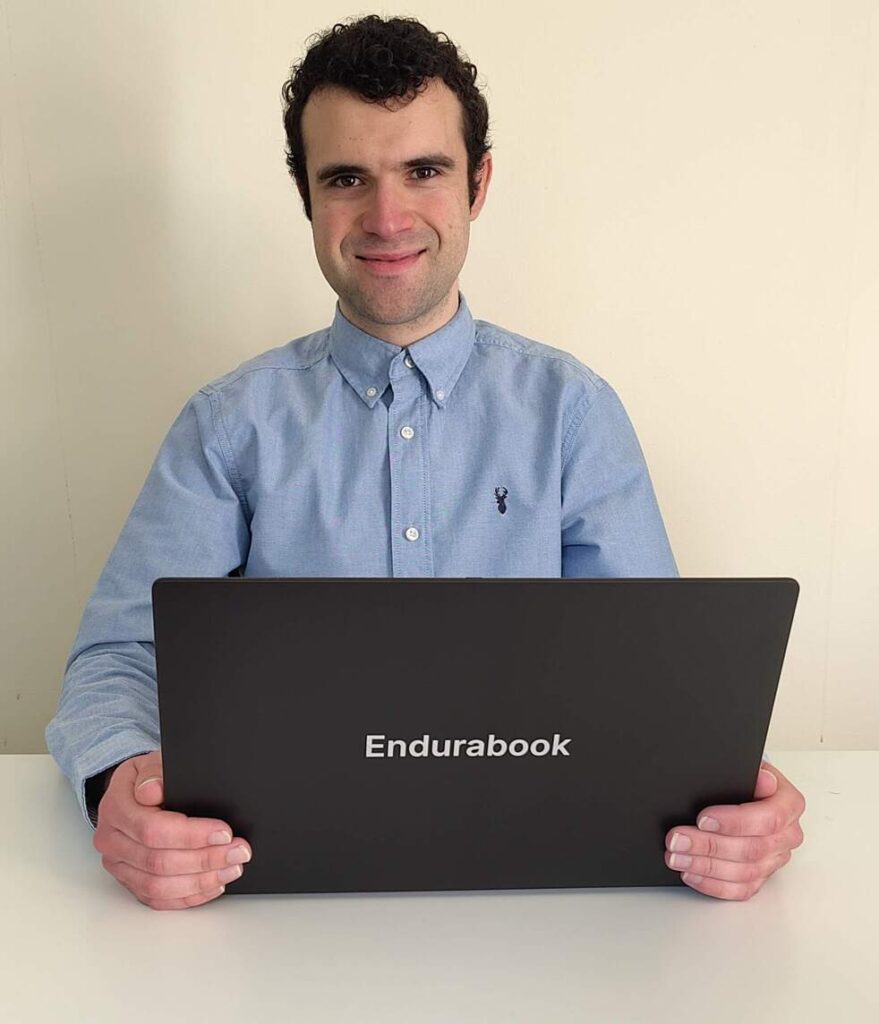
The founder
I’m Demetri Loizou, the founder of Endurabook. I started this project because the laptop I wanted didn’t exist: a machine designed from the start to be repaired rather than replaced, running Linux without compromise, and backed by a supply chain I could be honest about.
My background is in mechanical engineering and physics, with a decade of experience using Linux. I work with a specialist manufacturing partner in Shenzhen who handles hardware design and production. My role is to define the product, work directly with the manufacturer on firmware behaviour and thermal performance, coordinate after-sales support, and make every decision in the open.
A live teardown and community Q&A was streamed publicly and is available to watch.
I demonstrated the hardware publicly at the Hertfordshire County Show as a finalist in the Lord-Lieutenant of Hertfordshire’s Entrepreneurs Challenge.
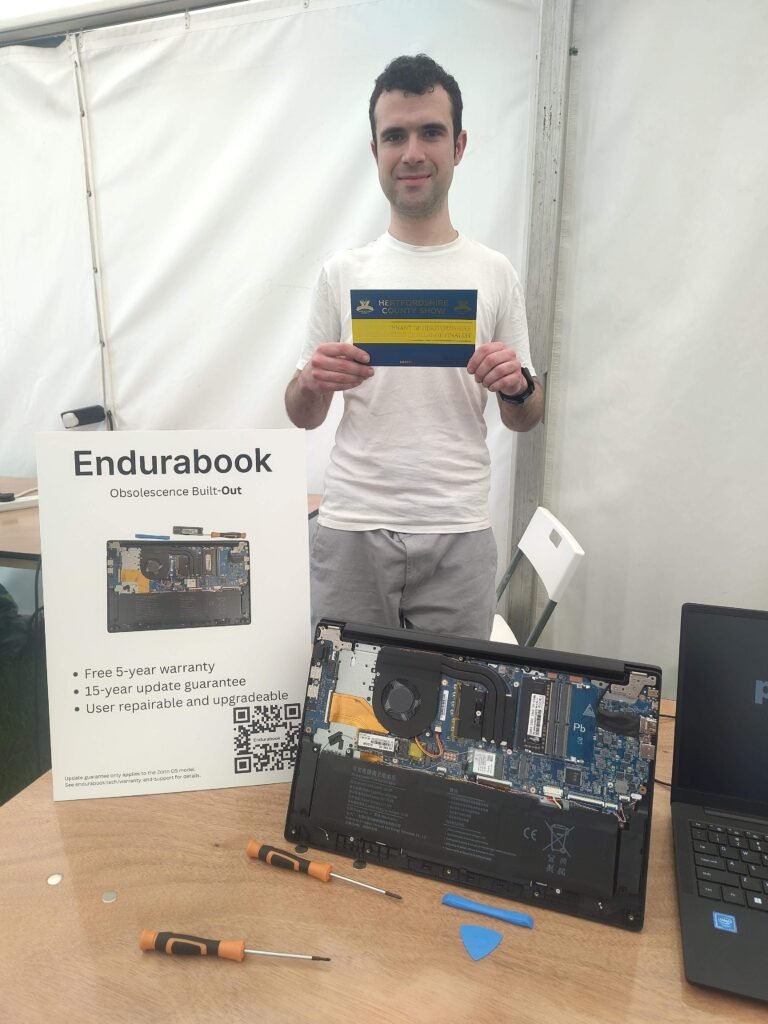
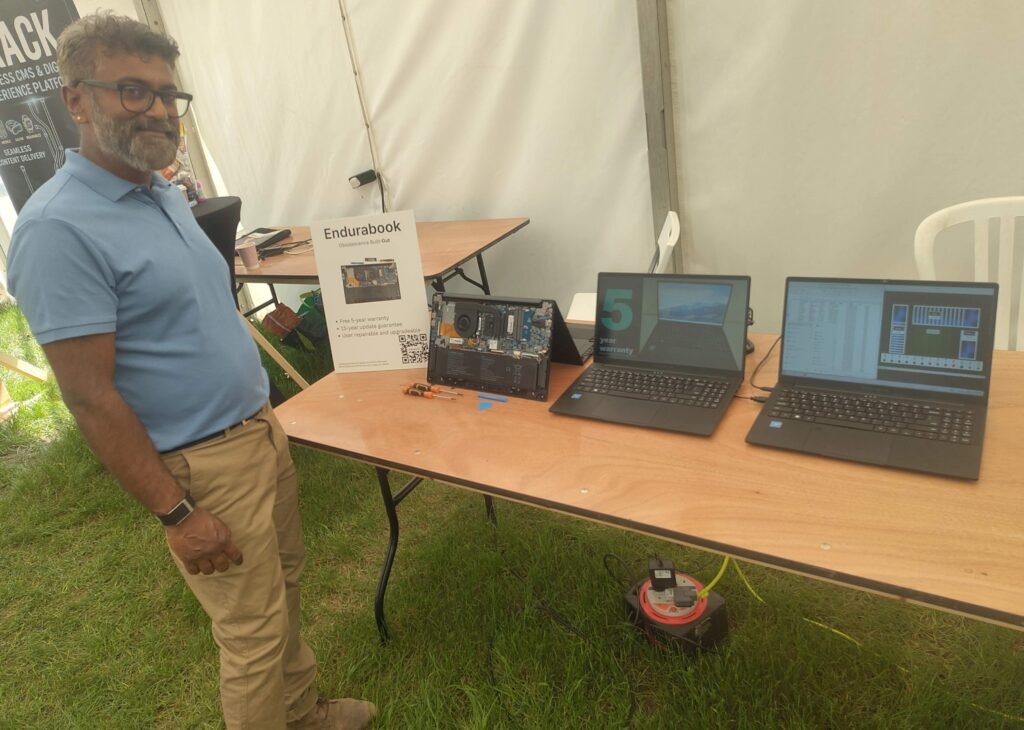
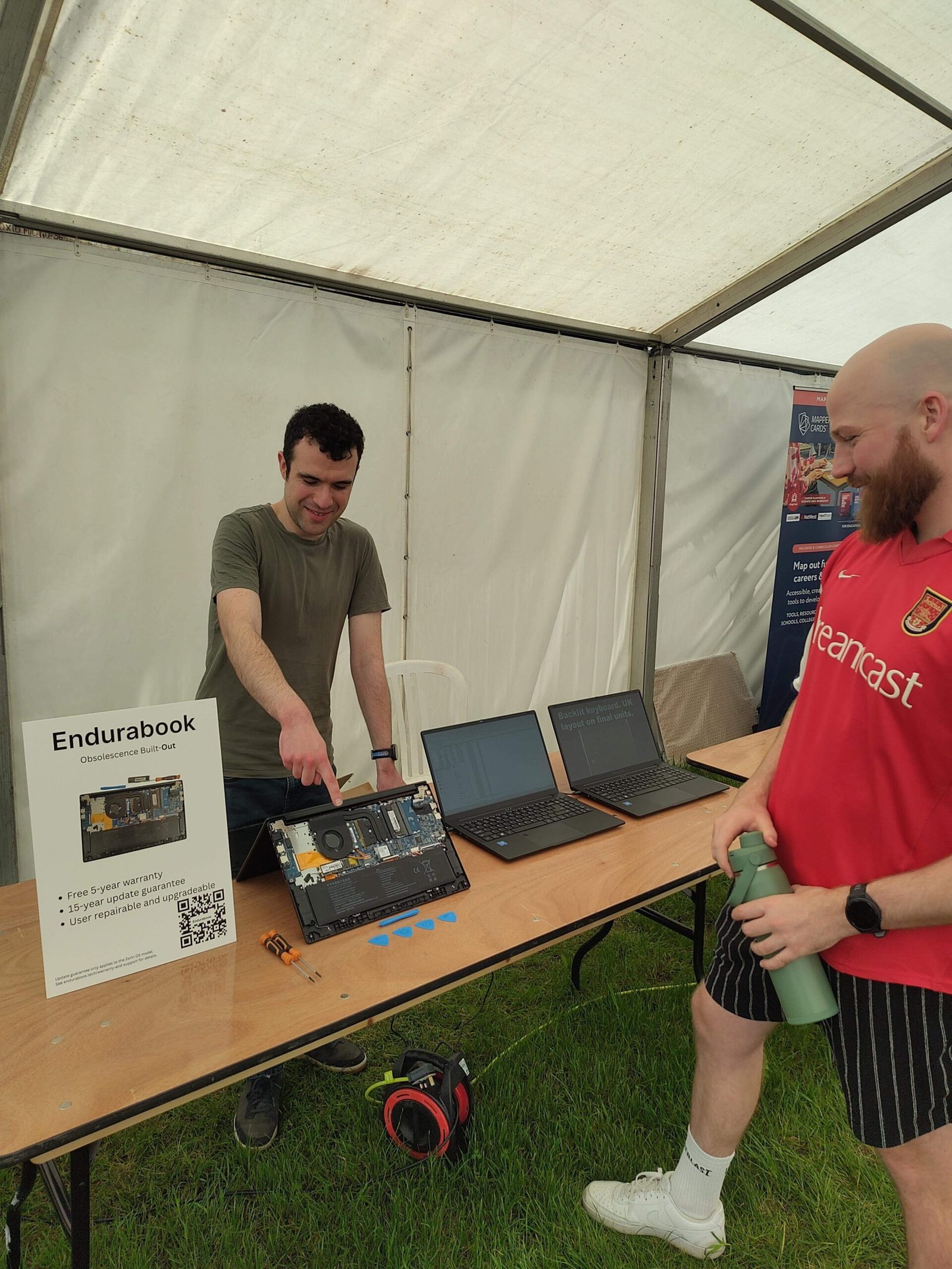
Endurabook at the Hertfordshire County Show, May 2026.
Why Endurabook exists
Most laptops are engineered around replacement cycles, not longevity. RAM is soldered. Batteries are glued in. Parts are unavailable or priced out of reach. When something fails, the path of least resistance is a new machine. The environmental and financial cost of that is significant and largely avoidable.
Endurabook takes the opposite approach. RAM, SSD, battery and more are all user-replaceable using common tools. Parts are available directly with published pricing. The goal is a machine designed to be owned for a decade, not discarded after two years because a single component failed.
How it is being built
Hardware is assembled by a specialist manufacturing partner in Shenzhen. An independent audit of their facilities and labour practices will be commissioned and the findings shared openly, including any areas for improvement.
Prototypes, supplier decisions and test results are shared as the project develops. Pre-order customers are contacted before payment is requested, and if the product does not meet the standards committed to, pre-orders are refunded in full.